What needed to change
Collectors with valuable physical assets need software that treats their collection like a portfolio, not a spreadsheet or photo folder.
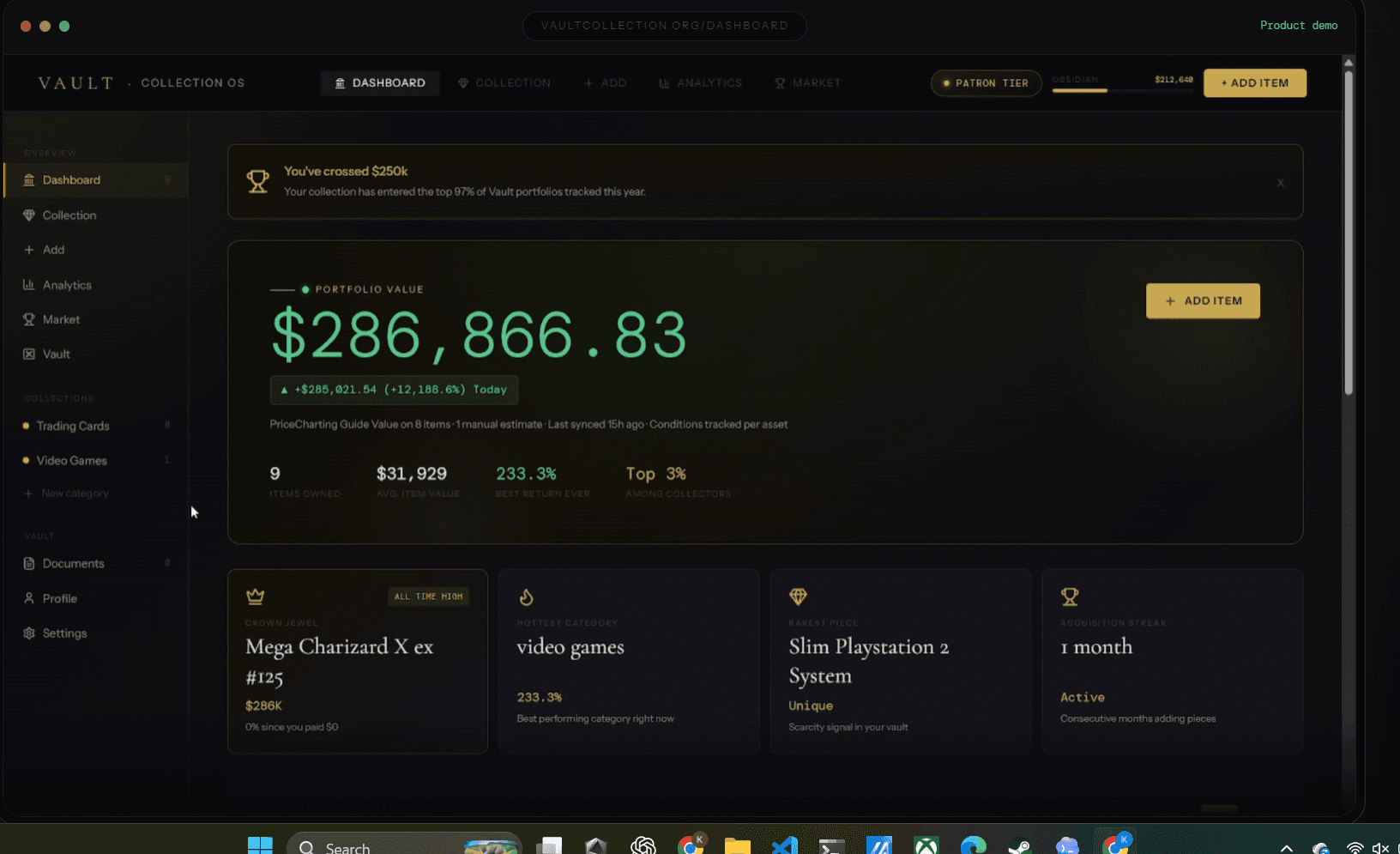
Designed and built a premium collection operating system for tracking high-value collectibles, portfolio value, acquisition signals, and collector status.
Founder & Builder
Collectors with valuable physical assets need software that treats their collection like a portfolio, not a spreadsheet or photo folder.
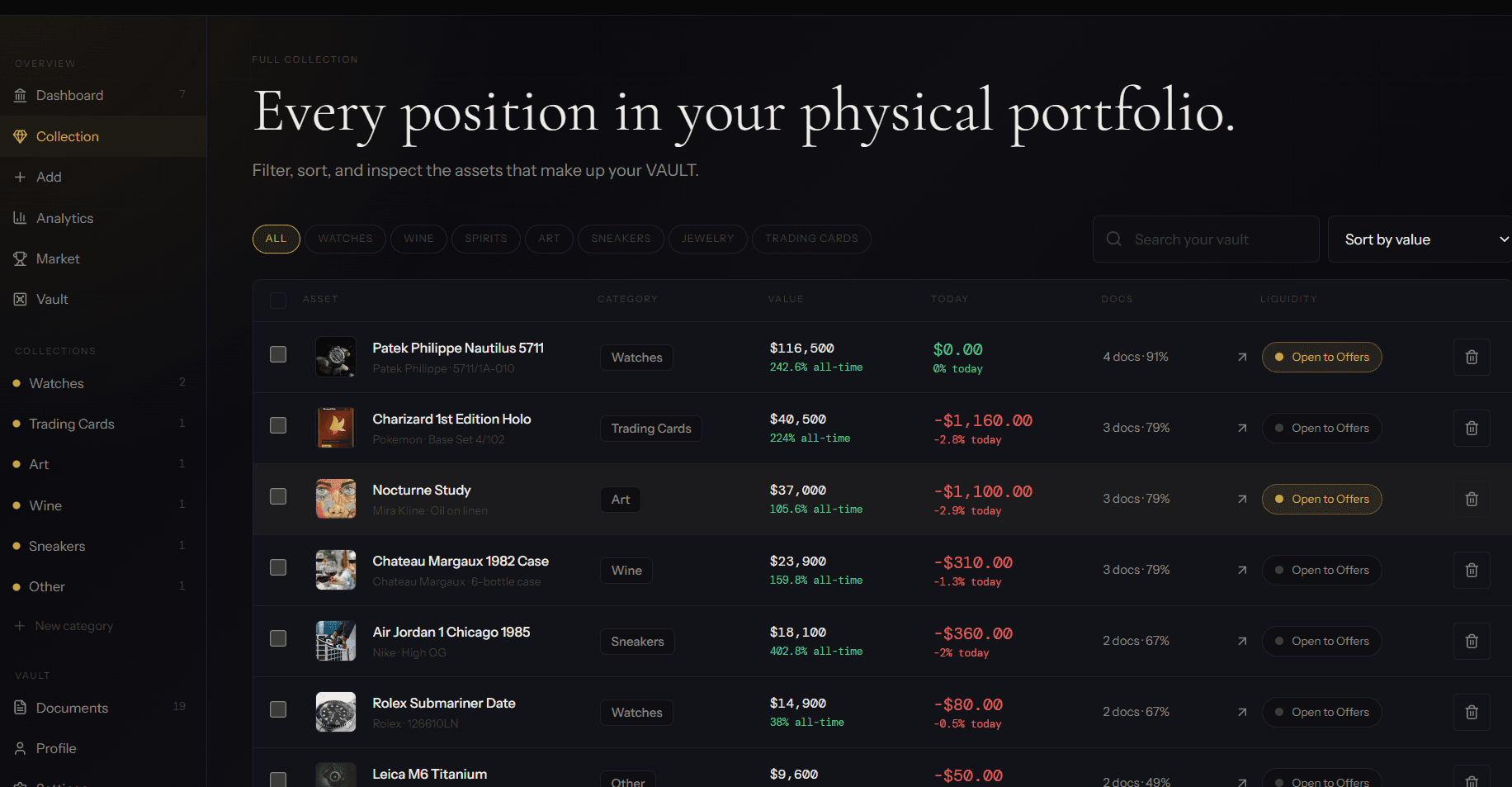
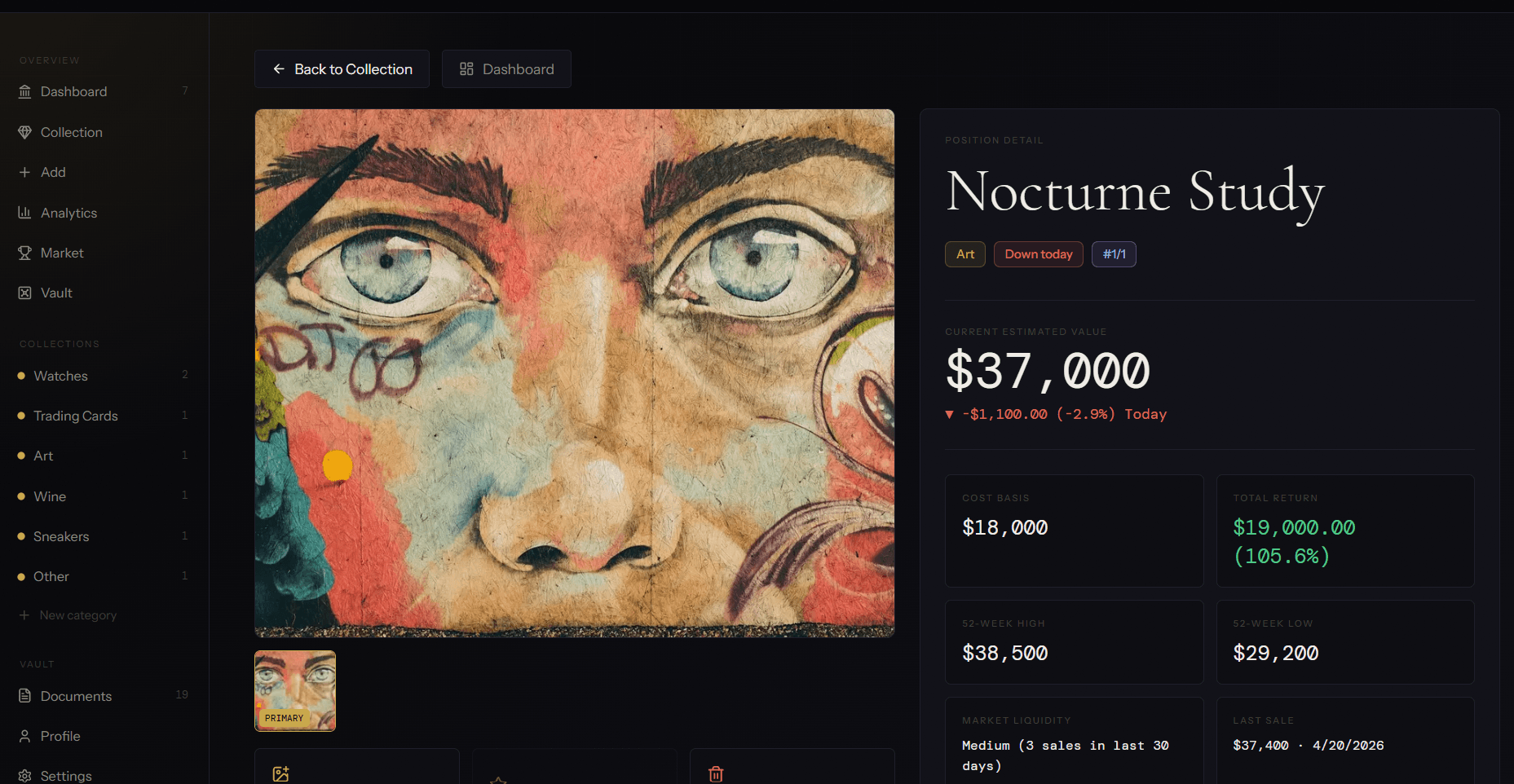
A full-stack collection operating system with normalized asset records, category and cost-basis metadata, portfolio valuation views, document status, liquidity signals, acquisition tracking, and item-level performance pages. I designed the information architecture and dark interface around the mental model of a financial terminal while keeping the workflows approachable for non-institutional collectors.
Created a monetizable product direction around collector identity, portfolio tracking, and high-signal ownership analytics, with a cohesive dashboard, collection table, and position-detail workflow that demonstrates end-to-end product ownership rather than a single polished landing screen.
Strong product taste is part of systems design when the buyer is emotionally attached to the asset. Data hierarchy, valuation language, progressive disclosure, and visual restraint all shape whether the product feels trustworthy enough to hold a collector’s most valuable records.
The constraints, reliability decisions, and system boundaries behind the visible product.
Designed the product around collector behavior: ownership pride, asset value, rarity, and portfolio status mattered more than generic inventory CRUD.
Created a dashboard language with valuation, category analytics, acquisition status, and premium visual cues so the product felt monetizable from the first screen.
Used product taste as part of the engineering: the interface had to make physical assets feel trackable, prestigious, and financially legible.
Structured the UI around normalized positions, cost basis, valuation deltas, document completeness, category exposure, and liquidity so a collector could move from portfolio overview to asset-level evidence without losing context.